Flood risk on the Costa Blanca: how to check whether a property is in a flood-prone area before you buy
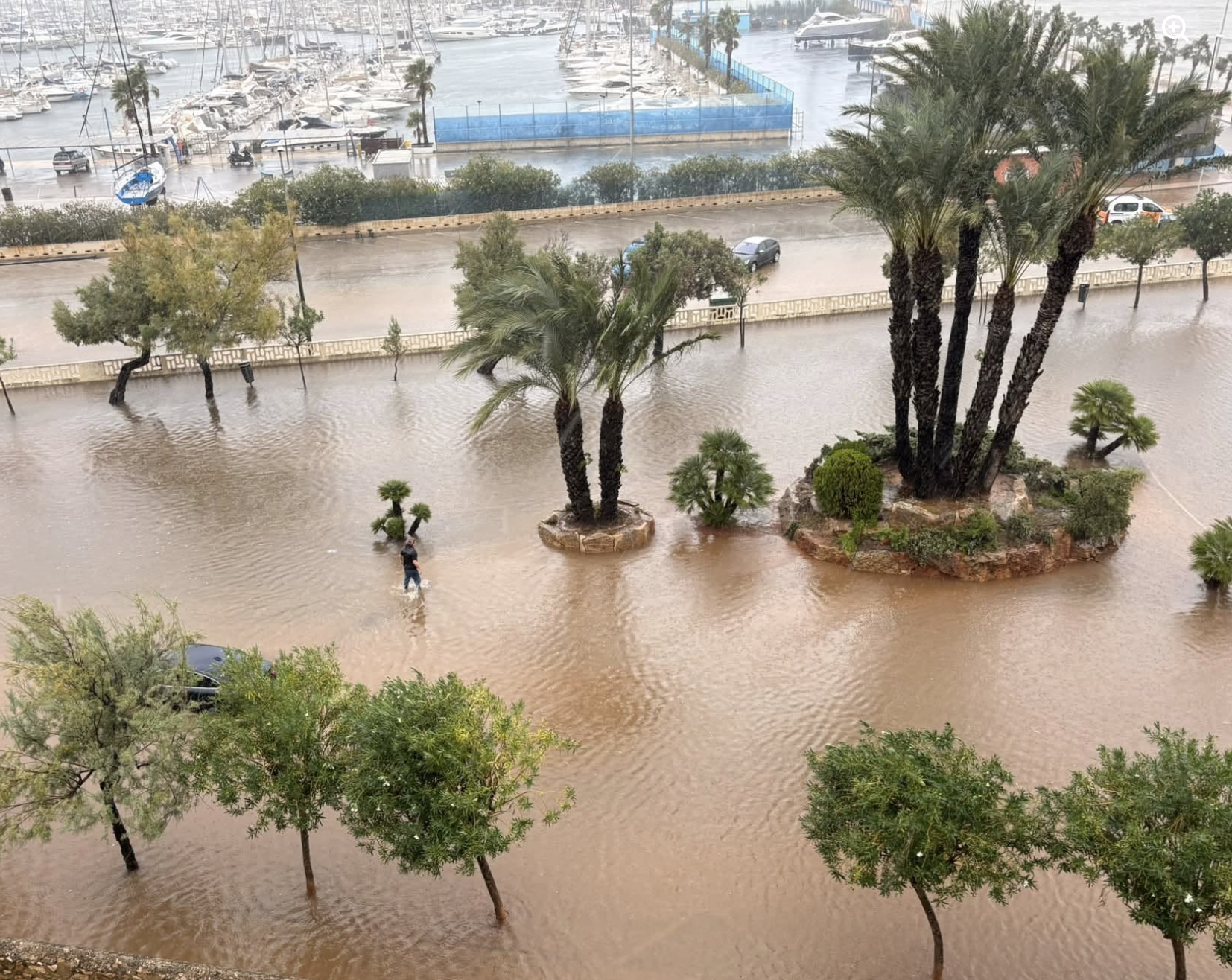
Autumn storms, including the DANA weather phenomenon, are not unusual on the Costa Blanca. A great deal of rain can fall in a short time, and the water does not only cause problems along rivers. Watercourses that are dry for most of the year (called barranco or rambla in Spanish) can fill up within a few hours, and low-lying streets and underground garages can flood.
This is no reason to panic, and it does not mean you shouldn't buy in the area. But today you can check a property's risk with simple, free tools before you make a decision. Here is how.
1. Check the national flood map (SNCZI)
Spain's Ministry for the Ecological Transition (MITECO) runs the SNCZI (Sistema Nacional de Cartografía de Zonas Inundables), the national flood-zone mapping system. Its map viewer is free for anyone to use, and it is also available on mobile through the infoAGUA app.
Look up the property's address and check whether it falls within any of the marked areas:
- Zona inundable (flood-prone area): where a major flood could reach the property.
- Zona de flujo preferente (preferential flow zone): where, in a flood, the main body of water and the strongest current pass. This is the most sensitive area.
- Dominio público hidráulico and zona de policía: the beds of watercourses and the protective strip around them, where strict rules apply to building.
2. Check the Valencian Region's own map (PATRICOVA)
The Costa Blanca belongs to the Valencian Community, which has its own flood-prevention plan: PATRICOVA. It classifies areas into six hazard levels (level 1 is the highest) and separately marks "geomorphological" hazard. The latter refers to places where, because of the shape of the terrain, water can collect, even if there has been no flood there recently.
The PATRICOVA layers can be viewed in the official map viewer of the Generalitat Valenciana. It is worth checking both maps (SNCZI and PATRICOVA), because they do not always mark the same areas.
3. Request a Land Registry extract (nota simple)
The nota simple is an extract from the Land Registry (Registro de la Propiedad), and it can be requested online. For new-build properties, flood risk must already be recorded in the Registry.
It is important to know: if an older property has no such entry, this does not mean there is no risk. It only means that recording it was not mandatory until now. That is why you should check the maps as well.
4. Ask the town hall
At the town hall's (Ayuntamiento) planning department you can request urban planning information (información urbanística) about a specific plot. This shows which rules apply to it, and if the plot is in a hazard area, this must also be stated.
5. Get an expert opinion, and look around on site
If the maps raise any doubts, it is worth hiring an architect or technical expert to examine the maps, the local planning rules and the plot itself together.
During a viewing, pay attention to a few things yourself:
- Is there a watercourse or dry riverbed nearby?
- Is the garage, basement or any ground-floor room below street level?
- Are there water stains, a waterline, or freshly renovated lower wall sections?
- Where does rainwater drain from the plot and the street?
- Ask the neighbours whether water has ever reached the area.
6. Check your insurance
In Spain, damage caused by extraordinary floods is typically paid not by your insurer but by the state-backed Consorcio de Compensación de Seguros. However, this requires a valid insurance policy: Consorcio cover is automatically included in home insurance, but only if you have insurance.
What to watch for:
- For residential properties, the Consorcio does not apply a deductible.
- The sum insured should match the real value of the property; otherwise, if you are underinsured, the payout is reduced proportionally.
- In case of damage, photograph everything before cleaning up, and keep damaged items for as long as you can.
7. What may change? The new decree in preparation
In July 2026, the Spanish government presented a draft royal decree on flood-prone areas. If it is approved, every property sale will require a declaration of whether the property is in a flood-prone area, and this will also have to be recorded in the Land Registry. This would apply not only to new builds but also to existing properties. The draft would also ban the construction of new underground garages in hazard areas.
The draft does not order any demolition or eviction, and it does not make existing properties illegal. As of October 2026, it is still a draft, not a law in force.
Frequently asked questions
If a property is in a flood-prone area, should I not buy it? Not necessarily. The degree of risk matters: there is a big difference between an area affected only by a rare, major flood and a preferential flow zone. What matters is that you know what you are buying, and take it into account in the price, the insurance and the protective measures.
Is it enough if the nota simple shows no flood entry? No. For older properties, recording it was not mandatory until now, so always check the maps as well.
Will the insurance pay if water floods my home? In the case of an extraordinary flood, the Consorcio typically pays, but only if you have a valid insurance policy.
Summary checklist
- SNCZI map: flood-prone area or preferential flow zone?
- PATRICOVA map: which hazard level?
- Nota simple: is there an entry?
- Town hall: urban planning information
- Site inspection and, if needed, an expert
- Insurance for the real value
At Molino Villas, we go through these steps with every client before they make a decision. If you are unsure about a property, we are happy to help you look into it.
Sources