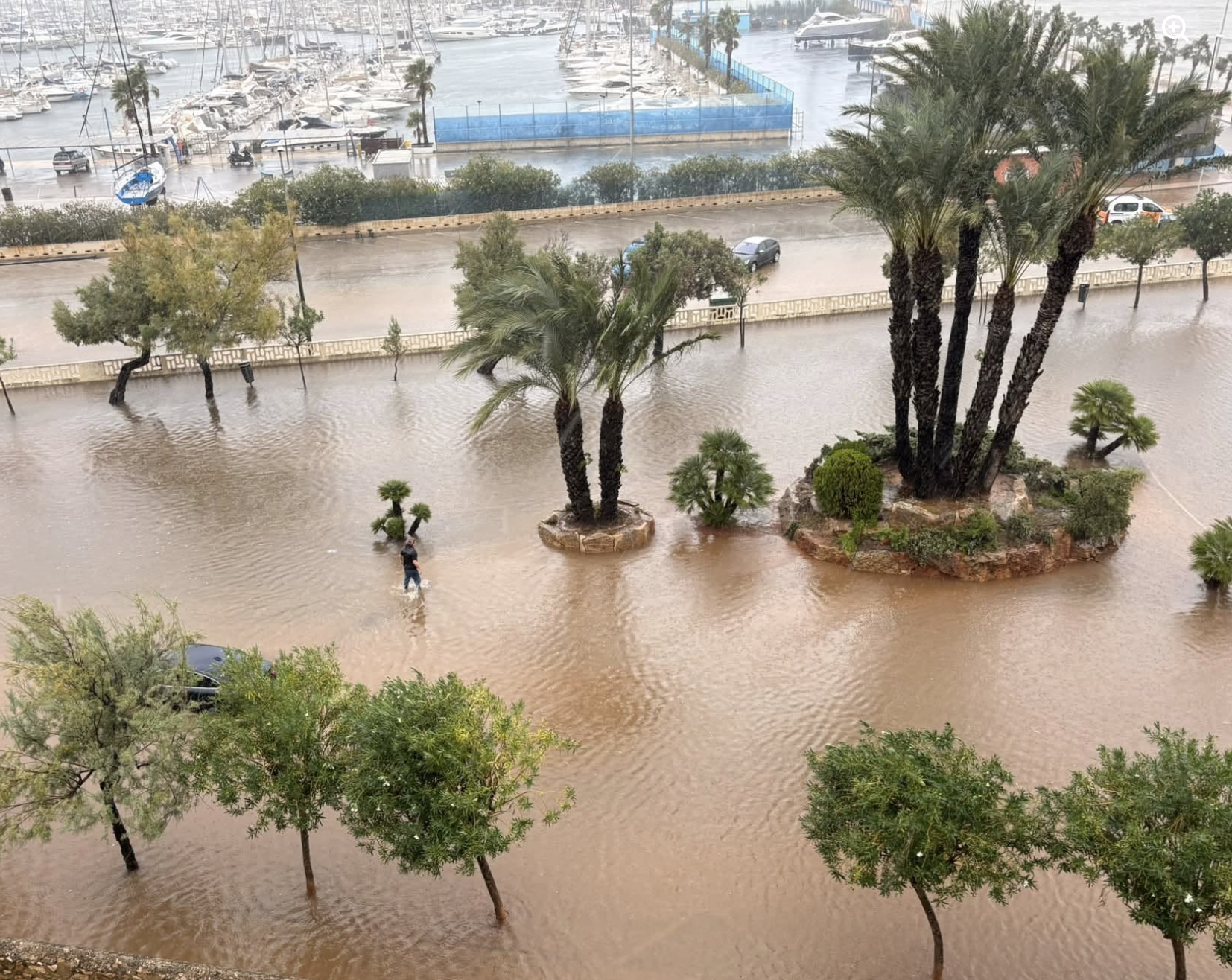
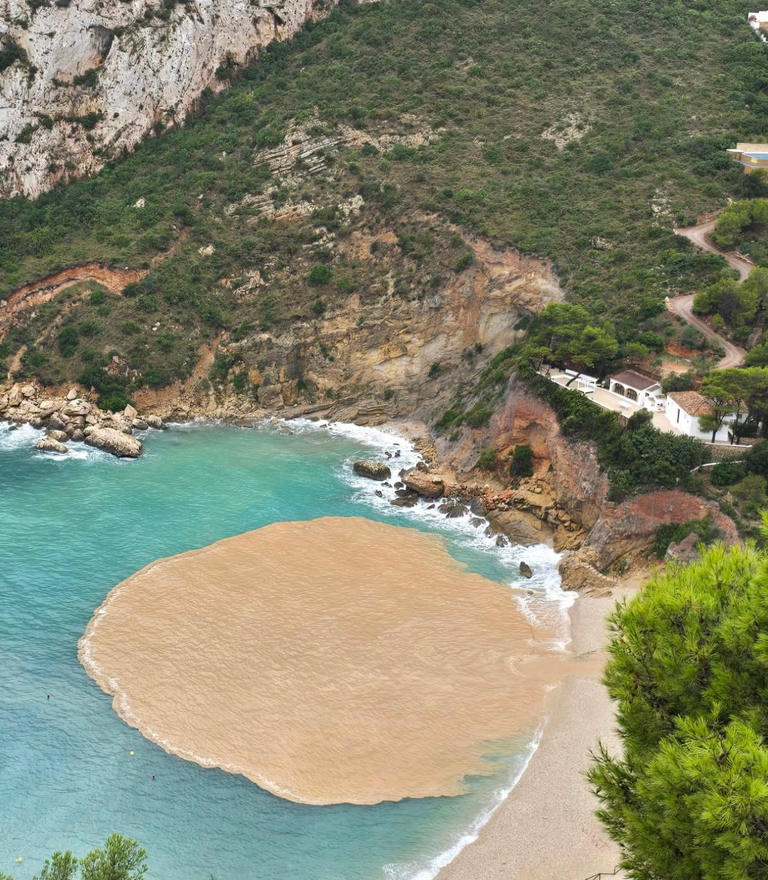
This weekend, another DANA has reached the Costa Blanca. On 18 October, Spain’s state weather agency (AEMET) issued a red warning for the southern coast of Valencia and the northern coast of Alicante. That includes us here in the Marina Alta.
If you’re here right now, your safety comes first. Follow the official warnings, avoid unnecessary journeys, and call 112 in an emergency. In this article I’ve gathered what’s happening now, why these storms are typical in autumn, and what to keep in mind as an owner, tenant or future buyer.
DANA Adam: what’s happening now?
AEMET named the storm Adam on 16 October. It’s the first named DANA of the season. The key facts as of the afternoon of 18 October:
- A red warning is in force on the southern coast of Valencia and the northern coast of Alicante. It’s the highest level and signals “extraordinary danger”.
- According to the forecast, the southern Valencian coast and the area around Cap de la Nau, Jávea’s headland, could see 200–300 mm of rain in 12 hours, and up to 60–90 mm in a single hour.
- The peak is expected between Sunday and Monday. Late on Monday, the system may move north towards Tarragona, then weaken towards Tuesday.
- The regional government (Generalitat) asks people to stay on higher floors and avoid unnecessary travel.
The situation can change from hour to hour. Always check the latest warnings with AEMET (aemet.es) and local authorities, not in social media groups.
What is a DANA, and why in autumn?
A DANA (depresión aislada en niveles altos) is an isolated pocket of cold air high in the atmosphere. Locals used to call it “gota fría”, the cold drop. In autumn the Mediterranean is still summer-warm, and when cold air arrives above it, an extreme amount of rain can fall in a short time. That’s why it’s a recurring phenomenon on the Valencian coast between September and November.
This isn’t the first warning this autumn. On 1 October, an orange warning was already in force on the northern coast of Valencia and Alicante, and classes were suspended in around twenty towns.
Many people still vividly remember 29 October 2024. That day, flooding caused by a DANA killed more than 230 people in Spain, most of them in the province of Valencia, especially in the towns of Horta Sud. One of the biggest lessons was that warnings must be taken seriously and acted on in time. That’s why a red warning today isn’t an overreaction. It’s a serious signal.
What to keep in mind now, and in the long run
During the storm:
- clear your drains and bring loose outdoor items inside;
- put important documents and hazardous products somewhere the water can’t reach;
- never cross a flooded road, on foot or by car, and never try to rescue your car during a flood;
- stay away from dry riverbeds (ramblas), as well as ground-floor and basement rooms;
- watch for Es-Alert messages on your phone, and call 112 in an emergency.
If you own property here but live elsewhere: ask your property manager or a trusted neighbour to check the house after the storm: the roof, gutters, pool, basement and garage. If there’s damage, take photos and report it to your insurer as soon as possible. In Spain, extraordinary natural damage such as flooding is usually covered by the state-backed Consorcio de Compensación de Seguros, through your home insurance.
If you’re planning to buy: when you view a property, look beyond the view and ask how it copes with heavy rain. Ask whether there’s a rambla nearby and whether water has ever got in, and check the official flood-risk map (SNCZI). We ask these questions about every property, because a home should give you security, not worries.
We’re here
The Costa Blanca is sunny and gentle for most of the year, but I’ll be honest with you: autumn storms are part of life here too. That’s no reason to be afraid. It’s a reason to live here well prepared and to choose your home wisely.
If you need help with your property after the storm, or simply have a question, write to me. Take care of yourselves.
– Kata Bene and the Molino Villas team
Sources: